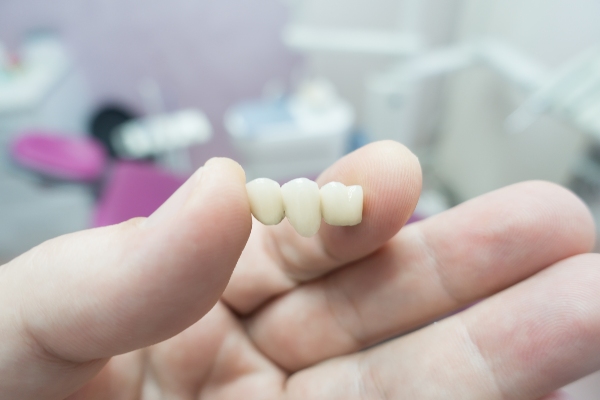
Curious about dental bridges? Read on to learn more about this type of restoration. The aftermath of tooth loss can be a struggle. The loss puts extra pressure on the rest of the teeth and chewing becomes less effective. Your speech gets affected too. Fortunately, dental bridges lay out a path to restoring the look and function of your smile. Each type of dental bridge has its advantages in dental restoration work.
Dental bridge options
Dental bridges come in various forms and are intended for specific dental situations. The type of tooth bridge selected depends upon the location of the missing tooth, the health of adjacent teeth, as well as individual preference. A dental professional will assess the patient’s needs and recommend the best option.
Traditional fixed bridges
The traditional fixed bridges involve placing crowns (called abutments) on adjacent teeth to hold the false tooth (pontic) in place. This type of bridge is used to fill gaps left by one or more missing teeth when adjacent teeth are healthy and strong. They restore the ability to chew and speak comfortably, keep remaining teeth from drifting out of place, and give the smile a natural look and feel.
Cantilever bridges
Cantilever bridges are a great solution when adjacent teeth are on only one side of the missing tooth. This hinges on a single crown that supports the pontic and is thus preferred for less stressed areas such as the front of the mouth. The advantage of cantilever bridges is their conservative approach. The dentist will only alter one adjacent tooth, preserving other natural teeth but still getting an aesthetically pleasing result.
Maryland bonded bridges
Maryland bonded bridges, which require little tooth preparation, involve attaching a metal or porcelain framework to the back of adjacent teeth. This bridge type is most useful for replacing front teeth because it provides a quick and cosmetically appealing solution that preserves the supporting teeth' structure. The major benefits are the preservation of tooth enamel and the non-intrusive placement process. Maryland bridges are a preferred choice for patients looking for a compromise between function and tooth conservation.
Implant-supported bridges
Implant-supported bridges are the most advanced dental bridge option. They offer an alternative to traditional crown support by using dental implants as direct anchors in the jawbone. This bridge is suitable for replacing several missing teeth in succession, providing great stability and avoiding jawbone atrophy associated with tooth loss. The benefits extend beyond mere aesthetics. Implant-supported bridges mimic the natural teeth root system and provide a long-term solution for healthy oral and facial structure.
Final note
The process of selecting the best dental bridge is personal, driven by your dental needs, aesthetic, and lifestyle goals. When you visit the dental office, the general dentist will present the available options, from traditional fixed bridges to the more advanced implant-supported ones. Each bridge type addresses a distinct problem — tooth loss. Knowing the benefits of each design helps you make the right decision. You can learn more by contacting our dental office to set up a consultation appointment.
Request an appointment or call Hermann Park Smiles at 713-522-1717 for an appointment in our Houston office.
Related Posts
Losing a tooth can affect your appearance and oral health, causing misalignment, bone loss, and changes to your facial structure. Dental bridges are a popular tooth replacement option for people with one or more missing teeth. They offer a way to restore your smile and oral function.A dental bridge is a fixed prosthetic device that…
No one has to live with a gap in their smile due to missing teeth when a dental bridge offers a versatile and effective solution. It is also important to remember that replacing missing teeth is more than just a matter of cosmetics. Here is why bridging that gap teeth is important and how a…
Dental bridges and dental crowns are wonderful, durable options to restore a smile. However, they are both employed for different reasons. By understanding the specifics of both, patients can learn which option is best for their needs when consulting with a dentist.Dental bridges are recommended after a tooth extraction, whether by trauma or professional intervention.…