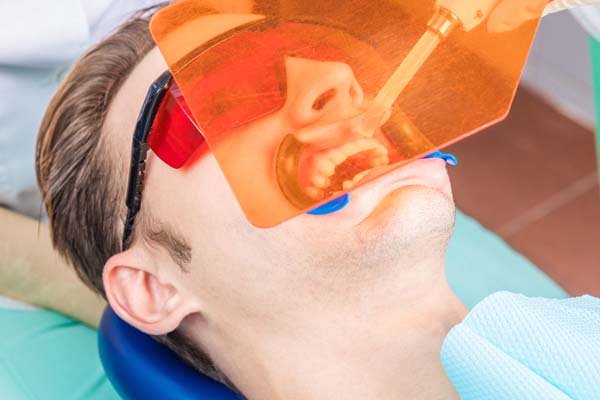
A yellowed or dingy smile can be embarrassing for anyone. Fortunately, teeth whitening can help remove years of stains and whiten your teeth several shades. This can help make your smile bright, beautiful, and more youthful.
While teeth whitening is safe for most patients, it can cause some dental sensitivity, especially for those who have already experienced this issue. The discomfort usually subsides on its own within a few days after treatment is complete. Understanding why whitening treatments cause sensitivity and how to manage it can help patients limit this side effect.
Why teeth whitening can cause dental sensitivity
During a professional teeth whitening treatment, a dentist will likely use a type of peroxide gel to remove stains from the teeth. Once this gel is activated, it begins the process of temporarily demineralizing the teeth to penetrate the enamel and target the stains. This demineralization can cause an increase in sensitivity, as it often exposes the microtubules that connect to tooth nerves. Once the treatment is complete, the teeth should remineralize, closing up the microtubules and easing sensitivity.
Another source of discomfort after teeth whitening is gum irritation. While this is rare with professional treatments, it is relatively common when using at-home whitening gels, strips or kits. The ingredients in these products can irritate the soft tissues of the mouth. Unfortunately, it can be difficult to prevent the whitening agents from spreading to the gums when applying at home. Dentists have a variety of useful tools and guards to protect these soft tissues, which is one of the many reasons why professional treatment is often the better choice.
How long sensitivity lasts after a professional whitening treatment varies from patient to patient. For many, the effects wear off within 24 to 48 hours. For others, sensitivity can persist for a few weeks. The important thing to remember is that it should gradually improve, even if it takes some time. If you already struggle with severe or chronic tooth sensitivity, you may want to consult with your dentist about other options to enhance your smile.
Tips for dealing with sensitivity from teeth whitening
There are many ways to deal with sensitive teeth. Both prevention and proper home care after the procedure can make a difference. If these tips do not help and symptoms persist or worsen, be sure to see a dentist for evaluation.
Schedule a professional treatment
An experienced dentist can choose the right type of whitening treatment for your needs while applying it with precision and care. This approach can reduce unnecessary discomfort and sensitivity.
Start preparing in advance
Even if your teeth are not sensitive before treatment, it can be helpful to start brushing with a sensitive toothpaste ahead of time. Two weeks before teeth whitening service should be enough to allow your teeth and gums to adjust to the change and enjoy the full benefits.
Talk with the dentist
Sometimes, the severity of a patient's dental sensitivity depends on the type and strength of the treatment used. Talk with a dentist about your options. If sensitivity is a concern for you, choose the gentlest strength that will still help you achieve the desired results.
Clean with care
You will still need to brush and floss your teeth on a regular basis after having your teeth whitened professionally. Continue to use sensitive toothpaste to help take the edge off and try to use lukewarm water when rinsing. Use a soft-bristled toothbrush and avoid brushing aggressively, especially for the first few days after treatment. A gentle touch at a 45-degree angle can help you clean effectively along the gumline without attacking your enamel.
Avoid troublesome foods and beverages
Certain dietary choices can aggravate symptoms and make tooth sensitivity much worse. Stay away from extremely hot or cold items until the discomfort completely subsides. Highly sweet or acidic foods can also trigger sensitivity. Some of the worst culprits include:
- Ice cream
- Sweet or sour candies
- Juice
- Coffee
- Soda
- Alcohol
- Citrus fruits
Limit these options or avoid them altogether to reduce tooth sensitivity.
Conclusion
Teeth whitening is a great way to boost your confidence and improve the overall look of your smile. By the very nature of its process, it can cause some patients to experience tooth sensitivity for a few days. If symptoms persist, taking proactive measures can help reduce and prevent this type of discomfort for more enjoyable treatment results.
Request an appointment here: https://www.hermannparksmiles.com or call Hermann Park Smiles at (713) 522-1717 for an appointment in our Houston office.
Check out what others are saying about our dental services on Yelp: Teeth Whitening in Houston, TX.
Related Posts
Take-home teeth whitening trays are an alternative to an in-office teeth whitening procedure. Although not as effective as in-office whitening, take-home trays may be ideal for certain patients, particularly those who only have mild teeth stains and are not searching for a long-term solution to a brighter smile.The best way for a patient to determine…
Teeth whitening can significantly improve the appearance of a person’s smile. When done professionally by a dentist, patients should expect to see ideal results. However, it is important to note that teeth whitening is not for everyone. Each person is unique and may react differently to professional teeth whitening.Do you want to learn more about…
You just had a cleaning. Someone hands you a printed page with tooth numbers, a column of codes, and a list of work. It reads like a repair estimate for a car. Most people nod, fold it into a bag, and never look at it again.Read it instead. You are allowed to take it home…
A full Invisalign treatment in the Houston area typically costs about $3,000 to $7,000.Shorter, minor cases can land below that range, while complex bite corrections run higher.Traditional braces usually fall in a similar overall range, so cost alone rarely decides between the two.Dental plans with an orthodontic benefit often cover part of Invisalign, and HSA…