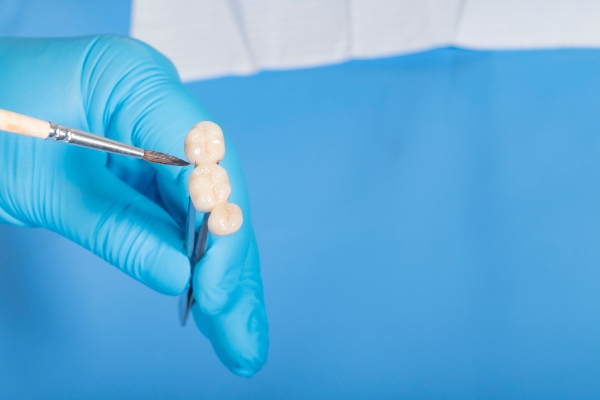
 Replacing missing teeth preserves the look and function of the smile, and a dental bridge is one of the most versatile ways to do that. Dental bridges are a popular tooth replacement method for numerous reasons. Here is a closer look at the benefits of this restoration and the process for getting one.
Benefits of a dental bridge
A dental bridge restores the way the smile looks and functions. A key benefit of this tooth replacement is that it is a permanent or fixed restoration that does not need removal for cleaning. It functions similarly to a natural tooth, and there is no worry of slipping out of place, like with dentures. In addition, dental bridges come in various options to suit the needs of a range of patients and tooth loss situations.
Who is a candidate?
A dental bridge is ideal for those who want a fixed solution and are missing up to four teeth in a row. Different styles of bridges have different candidacy requirements. However, a dentist can work with each patient to find the right fit.
The dental bridge process
The typical process of getting a dental bridge takes two appointments. During the initial consultation, the dentist helps the patient determine the style of dental bridge that will best suit their needs. Then, they take an impression of the area receiving the bridge and send it to a lab where it is constructed. The patient typically receives a temporary bridge to wear until the permanent one is ready approximately two weeks later.
How the process varies by type of bridge
Dental bridges come in different styles and can be composed of a variety of materials, including metal, porcelain, and composite resin. The following is a look at how candidacy requirements and the process differ for each bridge style.
Traditional or cantilever bridge
The traditional bridge is the most common bridge style. It comprises two crowns with a false tooth (pontic) in the center. The crowns on either side are cemented over the patient's natural teeth, and the pontic bridges the gap left by the missing tooth.
A cantilever bridge is like a traditional bridge but contains a single crown that attaches to only one natural tooth. This style requires the patient to have healthy natural teeth to support the crowns. In addition, the dentist has to alter the natural teeth significantly to accommodate the crowns.
Maryland bridge
The Maryland bridge also requires healthy teeth on either side of the space to support it. However, because the false tooth is attached to a metal framework bonded to the back of the teeth, this bridge requires minimal alteration to the natural teeth. A dentist typically recommends a Maryland bridge to replace front teeth.
Implant-supported bridge
An implant-supported bridge is like a traditional bridge, but the crowns attach to dental implants instead of the patient's natural teeth. The process of receiving this bridge takes longer because it begins with the surgical placement of the dental implant posts in the jaw. Then, the implant posts must integrate with the jawbone in a process that takes several months. Once this process is complete, the dentist can place the permanent bridge. Patients must have adequate jawbones to support the dental implants.
How long a dental bridge lasts
Most dental bridges last between 5 and 15 years, and many go well beyond that with good care. The bridge itself does not decay, but the natural teeth anchoring it still can. Daily brushing, cleaning under the pontic with a floss threader or water flosser, and keeping up with checkups at our Houston office are what stretch a bridge into its second decade. Habits like chewing ice or opening packages with your teeth are the fastest way to shorten that lifespan.
Dental bridge or dental implant: how to choose
Patients replacing a missing tooth in Houston usually weigh a bridge against a dental implant. A bridge is the faster route: no surgery, about two appointments, and a finished restoration in roughly two weeks. It also makes practical sense when the neighboring teeth already need crowns, since the bridge restores those teeth at the same time.
An implant stands on its own without reshaping healthy neighboring teeth, and it stimulates the jawbone where the root used to be. The tradeoff is time: implant treatment runs several months from placement to final restoration. Bone health, the condition of the adjacent teeth, budget, and timeline all factor in, and an exam is the only reliable way to settle the question for your mouth.
Getting a dental bridge in Houston at Hermann Park Smiles
Our office sits on Almeda Road near Hermann Park and the Texas Medical Center, and we place dental bridges in Houston for patients from the Museum District, Third Ward, Midtown, and across the greater Houston area. The first visit covers the exam, shade matching, preparing the anchor teeth, and impressions. You leave with a temporary bridge the same day. When the lab finishes the permanent bridge, usually about two weeks later, we check the fit and bite, make any adjustments, and cement it in place.
If cost is the concern holding you back, ask about our financing options when you schedule. Bringing your dental insurance details to the first visit also lets our front desk verify what your plan covers before any work begins.
Dental bridge FAQs
How many appointments does it take to get a dental bridge?
Two visits for most patients. The first covers preparation and impressions, and the second, about two weeks later, is the fitting and cementing of the permanent bridge. Implant-supported bridges take longer because the implants need several months to fuse with the jawbone first.
Does getting a dental bridge hurt?
No. The teeth are numbed with local anesthetic during preparation. Some patients notice mild sensitivity to temperature for a few days afterward, and the temporary bridge protects the prepared teeth until the permanent one is ready.
How many teeth can a dental bridge replace?
A bridge typically replaces one to four missing teeth in a row. Longer spans put more stress on the anchor teeth, so gaps of three or more teeth often do better with an implant-supported bridge.
How do you clean under a dental bridge?
Brush twice a day as normal, then clean under the pontic once a day with a floss threader, an interdental brush, or a water flosser. Food and plaque collect in that space, and keeping it clean protects the anchor teeth that hold the whole bridge.
Can a dental bridge be repaired if it breaks?
Sometimes. A small chip in the porcelain can often be smoothed or patched. A loose or cracked bridge usually needs to come off and be remade. Either way, call our office promptly, because a damaged bridge exposes the prepared anchor teeth underneath.
A versatile solution for replacing missing teeth
Getting a dental bridge is an effective and natural-looking way to restore a smile after tooth loss. Patients have many options regarding tooth replacement. Call our team today to learn more about dental bridges and tooth replacement.
Request an appointment or call Hermann Park Smiles at 713-522-1717 for an appointment in our Houston office.
Related Posts
Losing a tooth can affect your appearance and oral health, causing misalignment, bone loss, and changes to your facial structure. Dental bridges are a popular tooth replacement option for people with one or more missing teeth. They offer a way to restore your smile and oral function.A dental bridge is a fixed prosthetic device that…
No one has to live with a gap in their smile due to missing teeth when a dental bridge offers a versatile and effective solution. It is also important to remember that replacing missing teeth is more than just a matter of cosmetics. Here is why bridging that gap teeth is important and how a…
Dental bridges and dental crowns are wonderful, durable options to restore a smile. However, they are both employed for different reasons. By understanding the specifics of both, patients can learn which option is best for their needs when consulting with a dentist.Dental bridges are recommended after a tooth extraction, whether by trauma or professional intervention.…